PUBLISHED ON:
February 2, 2026

Architecting a Governed Multi-Agent AI System for a Healthcare Provider. How 0to60.AI Enabled Autonomous Intelligence Without Compromising Compliance

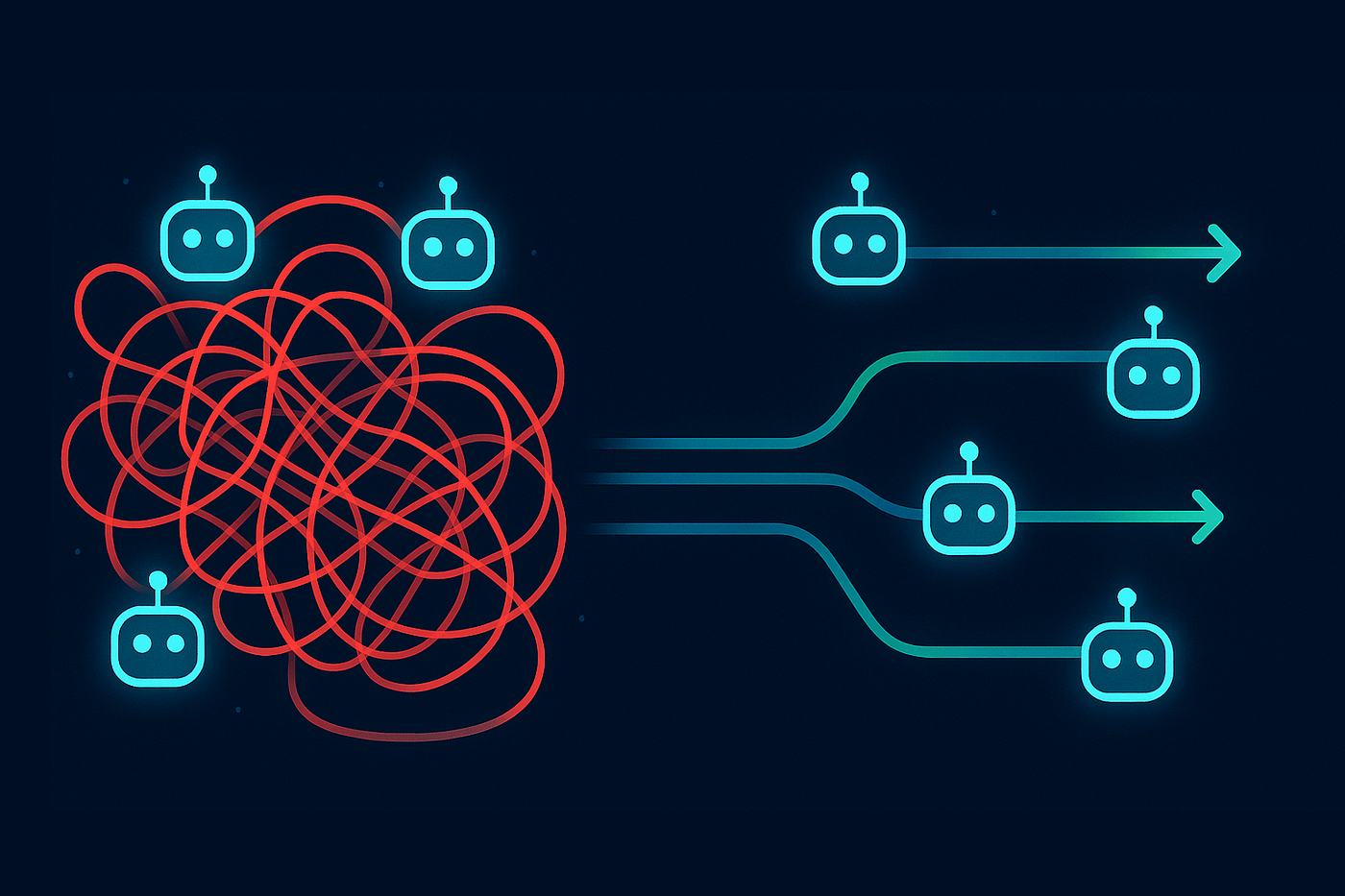
Hero Image

Executive Summary

A large regional healthcare provider (multi-hospital network across two countries) engaged 0to60.AI to modernize its analytics and operational intelligence stack.

The organization had:

Fragmented EHR, billing, and supply chain systems

Inconsistent financial and clinical definitions

Manual compliance monitoring

Delayed operational decision cycles

Executive pressure to “deploy AI agents”

Rather than introducing autonomous agents immediately, 0to60.AI implemented a transformation-first, semantics-driven multi-agent architecture.

The result

38% reduction in manual compliance review workload

52% faster financial reconciliation cycles

Automated anomaly detection in claims and procurement

Zero governance breaches during phased autonomy rollout

Enterprise-grade auditability across all agent actions

The Challenge

The healthcare network wanted to deploy AI agents across:

Clinical operations

Revenue cycle management

Procurement

Compliance & audit

However, early internal experimentation revealed significant risks:

Different departments used different definitions of “margin”

Claims logic varied by region

Contract thresholds were inconsistently documented

Data refresh cadence was unclear

Tribal knowledge existed only in senior administrators’ heads

Leadership realized:

Deploying AI agents on top of ambiguous semantics would amplify risk.

They needed architecture — not hype.

0to60.AI Approach: Architecture Before Autonomy

Step 1: Transformation-First Foundation

We began by restructuring their data stack into a governed medallion architecture:

Bronze → Silver → Gold

Using 0to60.AI’s prompt-to-code transformation

capabilities, we:

- Standardized financial and clinical metrics

- Rebuilt claims calculation logic

- Normalized regional contract terms

- Encoded reimbursement formulas into machine-readable pipelines

- Validated transformation outputs automatically

This eliminated cross-department inconsistencies before any agent was introduced.

Step 2: Enterprise Data Dictionary & Semantic Layer

We then built a formal AI-ready semantic layer that included:

- Unambiguous definitions (e.g., Gross Margin vs Adjusted Margin)

- Calculation formulas

- Refresh frequency

- Data ownership

- Regulatory applicability (HIPAA, regional policies)

- Access control rules

- This step alone resolved 70% of inconsistencies observed in executive dashboards.

Step 3: Domain-Constrained Multi-Agent Design

Rather than deploying a single enterprise agent, we architected specialized agents:

1. Revenue Cycle Agent

- Claims validation

- Contract reconciliation

- Three-way matching logic

- Anomaly detection

- Escalation routing

2. Clinical Operations Agent

- Bed occupancy thresholds

- Staff scheduling alerts

- Supply chain reordering signals

- Operational bottleneck detection

3. Compliance Sentinel Agent

- Audit trail validation

- HIPAA access monitoring

- Documentation completeness checks

- Regulatory deadline tracking

Each agent:

Operated within its gold-layer domain

Had strict access boundaries

Was grounded in department-specific system prompts (digital SOPs)

Logged all actions for audit

No agent had cross-domain autonomy.

Step 4: Orchestration Layer Implementation

To prevent chaos, we implemented an orchestration layer that:

Routed queries to appropriate domain agents

Enforced validation gates before actions

Maintained audit logs

Required human approval for high-risk actions

Coordinated cross-agent communication only through structured interfaces

This prevented:

Conflicting recommendations

Duplicate actions

Unauthorized escalations

Think of it as AI air traffic control inside the hospital network.

Step 5: Phased Autonomy Deployment

We rolled out in three phases:

Phase 1: Insight Mode (0–3 months) Agents observed and recommended only.

Phase 2: Assisted Mode (3–6 months) Agents executed actions with human approval.

Phase 3: Controlled Autonomy (6+ months) Agents autonomously acted within predefined financial and compliance thresholds.

For example:

Claims under a certain validated threshold were auto-processed.

Procurement anomalies triggered contract validation automatically.

Compliance gaps generated Jira tickets with escalation routing.

At no point was unrestricted autonomy allowed.

Results

Within 9 months, the healthcare provider achieved:

  • Operational Efficiency
  • 38% reduction in manual compliance workload
  • 52% faster claims reconciliation
  • 27% reduction in procurement errors
  • Financial Governance
  • Early detection of contract leakage
  • Automated validation of reimbursement mismatches
  • Reduction in low-threshold invoice risk
  • Regulatory Stability
  • Full audit trail visibility
  • Role-based access enforcement
  • HIPAA-compliant agent logging
  • Executive Confidence
  • AI decisions explainable
  • Agent behavior predictable
  • Governance intact

Key Lessons

1. Semantics First Multi-agent systems fail when business definitions are ambiguous.

2. Domain Specialization Reduces Risk Generalist enterprise agents introduce entropy.

3. Orchestration Is Mandatory Autonomous systems need coordination layers.

4. Guardrails Before Autonomy AI should earn autonomy — not be granted it by default.

5. Transformation Is Strategy Clean, governed data enables safe intelligence.

Results

Why This Matters for Healthcare

Healthcare is uniquely sensitive:

Regulatory exposure

Patient privacy

Financial complexity

Multi-system fragmentation

Multi-agent AI can transform operations — but only when engineered with discipline.

At 0to60.AI

We don’t deploy agents as experimental overlays.

We architect governed intelligence systems that operate safely inside regulated environments.

Because in healthcare:

Accuracy saves money.
Governance prevents penalties.
Clarity protects patients.

And disciplined AI scales both efficiency and trust.